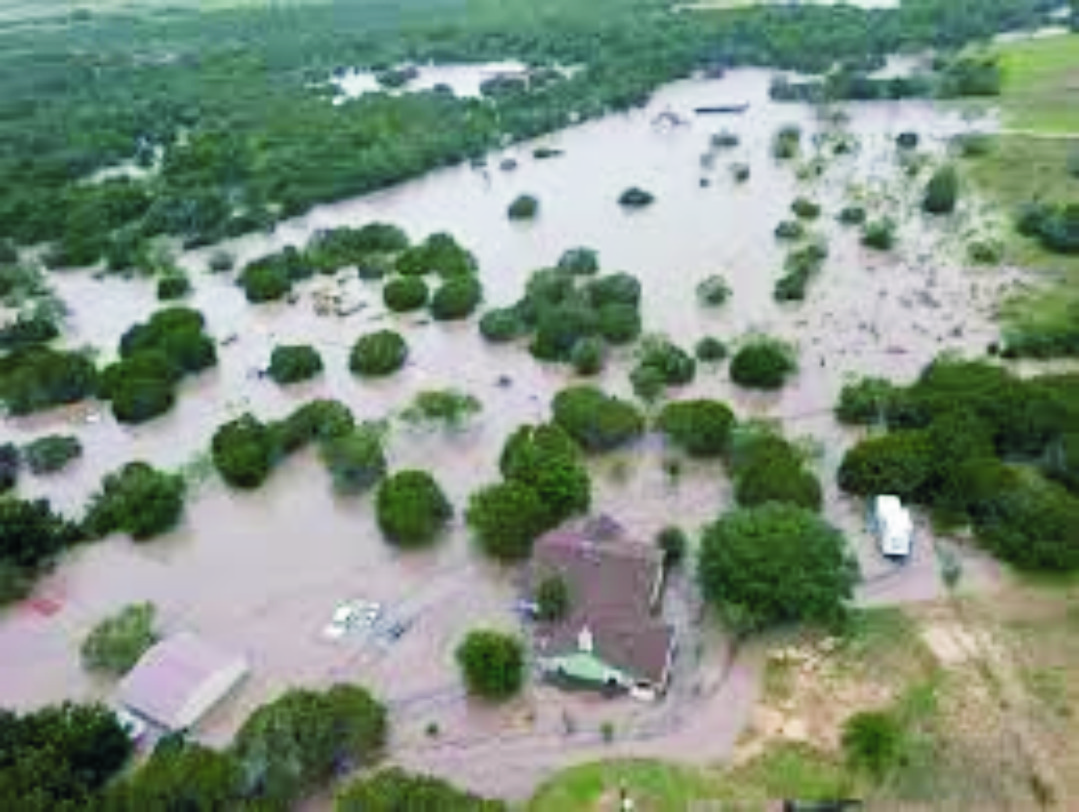
ISLAMABAD (UPA) : At least 302 people have died as a result of the continuing monsoon rains, according to the National Disaster Management Authority’s (NDMA) updated data of casualties and damages provided on Monday.
According to the figures, 12 people were injured in different rain-related accidents over the last 24 hours, and two more individuals—including a man in Punjab and a kid in Khyber Pakhtunkhwa—were died in house collapse incidents.
It increased the number of fatalities to 302 and injured 727 people nationwide.
There were 104 men, 57 women, and 141 children among the dead, and 278 men, 207 women, and 242 children among the injured.
According to the NDMA spokeswoman, the rains have also killed 428 livestock and damaged 1,678 homes.
Meanwhile, a forecast for potential flooding between August 5 and August 10 was released by the NDMA’s National Emergencies Operation Centre (NEOC).
Rising river flows, urban flooding, and isolated flash floods in susceptible locations are all possible outcomes of the predicted weather system. Increased volumes are therefore anticipated in all of the major rivers, especially the Chenab and Jhelum. Flood levels in the Chenab River in Marala, Khanki, and Qadirabad are probably going to be medium to high. High flood levels could also be experienced by the River Jhelum and its tributaries upstream of the Mangla at the same time. It is anticipated that the River Kabul near Nowshera would reach low flood levels. Because of the continuous rainfall in their catchment areas, the rivers Swat and Panjkora, as well as related tributaries and nullahs, may swell to medium volumes.
The barrages of Tarbela, Kalabagh, Chashma, Taunsa, and Guddu are currently at low flood levels, but they could rise to medium flood stages if inflows and outflows continue to grow.
Increased flows are anticipated in Gilgit-Baltistan’s rivers Hunza and Shigar, with the possibility of localized flash floods in their tributaries, the Hispar, Khunjerab, Shimshal, Braldu, Hushe, and Saltoro Rivers.
The anticipated rains in Balochistan is also predicted to cause stream networks in the districts of Musakhel, Sherani, Zhob, and Sibi to swell. Mangla Dam is currently at 60% storage capacity, while Tarbela Dam is at 90%. Over the next few days, further storage is expected to be added.
About The Author